Do your eyelids feel gritty, itchy, inflamed or constantly uncomfortable? Do you wake with crusting around your lashes, experience burning or watery eyes, or find that your vision fluctuates throughout the day?
The problem may not begin with the eye itself. It may begin along the eyelid margin.
Blepharitis, excessive eyelid biofilm and Demodex-related lid disease can all disrupt the tear film and contribute to persistent dry-eye symptoms. When home eyelid hygiene is not providing sufficient control, an in-clinic eyelid treatment such as ZEST—Zocular Eyelid System Treatment—may help provide a more thorough clean.
What is ZEST?
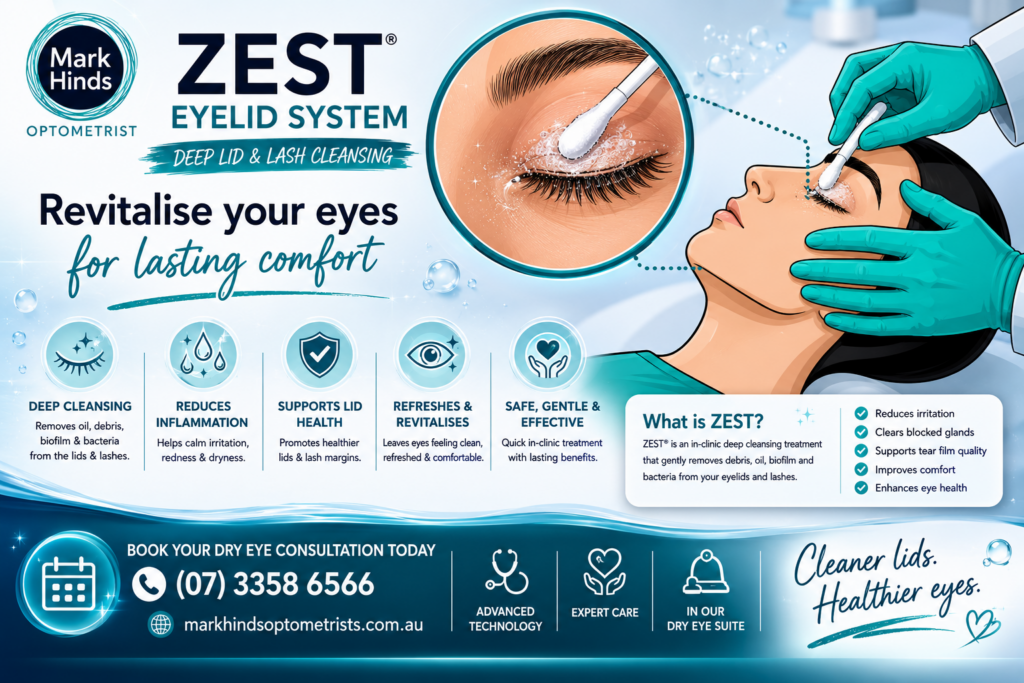
ZEST is a professional eyelid-cleansing and debridement procedure performed in the clinic.
The treatment uses a proprietary okra-based gel that is carefully applied to the closed eyelids, lash roots and lid margins. The gel and gentle cleansing action help loosen and remove accumulated oils, dead skin cells, cosmetic residue, biofilm and other debris from around the eyelashes.
You can think of ZEST as a professional deep clean for the eyelids. It reaches areas that can be difficult to clean effectively with home eyelid wipes or cleansers alone.
ZEST is non-surgical and does not involve needles or incisions. Most patients find the procedure comfortable, and it can generally be completed during a routine clinical appointment.
What is blepharitis?
Blepharitis is inflammation affecting the eyelid margins. It may involve the skin and lash follicles at the front of the eyelid, the oil-producing meibomian glands within the lids, or both.
Common signs and symptoms include:
- red or swollen eyelid margins;
- crusting or flaky debris around the eyelashes;
- itching or irritation;
- burning or stinging;
- a gritty or foreign-body sensation;
- watery eyes;
- eyelids sticking together on waking;
- sensitivity to light;
- recurrent styes or blocked glands;
- fluctuating vision; and
- dry, tired or uncomfortable eyes.
Blepharitis is often chronic. Treatment is therefore directed toward controlling the contributing factors and maintaining eyelid health, rather than promising a permanent one-off cure.
What does Demodex have to do with it?
Demodex are microscopic mites that commonly live in human hair follicles and oil glands. Small numbers may cause no difficulty, but an excessive population around the eyelashes can contribute to eyelid inflammation.
A characteristic sign is the presence of cylindrical sleeves or collarettes around the base of the lashes. Patients may also experience itching—often worse in the morning—redness, irritation, lash changes and recurring eyelid inflammation.
ZEST can help remove collarettes, debris and biofilm associated with Demodex blepharitis. However, it is best understood as a professional cleansing and debridement treatment, not as a guaranteed eradication treatment for the mites themselves.
Where clinically significant Demodex infestation is present, additional targeted therapy and ongoing home care may be required. Your optometrist will recommend an appropriate plan based on the examination findings and the treatments available in Australia.
How eyelid disease contributes to dry eye
A healthy tear film is more than water. Its outer oily layer slows evaporation and is largely supplied by the meibomian glands within the eyelids.
When the lid margins are inflamed, covered with biofilm or affected by gland dysfunction, the oil layer can become deficient or unstable. Tears may then evaporate too quickly, producing dryness even when the eyes appear watery.
This can lead to:
- burning and stinging;
- grittiness;
- redness;
- reflex watering;
- sensitivity to wind or air conditioning;
- contact-lens discomfort;
- tired eyes when using screens; and
- vision that clears temporarily after blinking.
Improving eyelid-margin hygiene can therefore form an important part of a broader dry-eye management plan. Contemporary dry-eye guidance recognises lid hygiene, professional blepharoexfoliation and targeted Demodex therapy among the available approaches to eyelid-related ocular-surface disease.
Who may benefit from ZEST?
ZEST may be considered for patients with:
- chronic or recurrent blepharitis;
- visible biofilm or debris along the lid margins;
- crusting around the eyelashes;
- Demodex-associated collarettes;
- red, itchy or irritated eyelids;
- meibomian gland dysfunction;
- evaporative dry eye;
- fluctuating vision related to an unstable tear film;
- recurrent eyelid inflammation;
- difficulty performing effective home lid hygiene; or
- persistent symptoms despite regular eyelid cleansing.
Not every patient with dry eye needs ZEST. Dry eye can have several causes, including reduced tear production, meibomian gland dysfunction, allergy, inflammation, medication effects, contact-lens wear and environmental exposure.
A proper assessment is needed to identify which factors are relevant in your case.
What happens during treatment?
Before recommending ZEST, your optometrist examines the eyelids, lashes, lid margins, tear film and ocular surface. The meibomian glands and the presence of Demodex-type collarettes may also be assessed.
During the procedure:
- You sit comfortably with your eyes closed.
- The ZEST gel is applied to the eyelids and lash lines.
- The lashes and lid margins are gently cleaned to loosen and remove accumulated material.
- The treatment area is rinsed and checked.
- Your optometrist discusses the appropriate home-care and follow-up plan.
The process is usually relatively quick. Some people notice that their eyelids feel cleaner or more comfortable soon afterwards, although the response varies and chronic conditions generally require continuing management.
What happens after ZEST?
ZEST is usually one part of treatment, not the entire dry-eye plan.
Depending on your findings, ongoing care may include:
- a prescribed home eyelid cleanser;
- warm compresses;
- gentle lid massage;
- lubricating eye drops;
- treatment directed at meibomian gland dysfunction;
- management of allergy or inflammation;
- advice about cosmetics and lash products;
- contact-lens adjustments;
- targeted Demodex management; or
- other in-clinic dry-eye treatments.
Regular home care helps reduce the return of biofilm and debris. Some patients use ZEST as an occasional eyelid “reset,” while those with chronic blepharitis may benefit from periodic maintenance.
The appropriate interval depends on the severity of the condition, the speed at which debris returns, associated gland dysfunction and how well the eyelids can be maintained between visits.
Is ZEST safe?
ZEST is designed as a non-invasive eyelid treatment and is generally well tolerated when performed by a trained eye-care practitioner.
As with any treatment around the eyes, temporary sensitivity or irritation may occur. Your optometrist should first consider your ocular-surface health, allergies, skin sensitivity and any active infection or inflammation.
If you develop sudden eye pain, marked redness, light sensitivity, discharge or reduced vision, you should seek prompt professional assessment rather than assuming the problem is routine dry eye or blepharitis.
A cleaner eyelid margin can support a healthier tear film
Persistent dry-eye symptoms are not always solved by adding another bottle of artificial tears. When inflammation, biofilm, crusting or Demodex-related debris is present along the eyelids, the lid margin itself needs attention.
ZEST offers a thorough, professionally administered clean that can help remove accumulated material and provide a better starting point for ongoing eyelid and dry-eye care.
At Mark Hinds Optometrists, we recommend ZEST only after examining the eyelids, lashes, tear film, ocular surface and meibomian glands. We then develop an individual treatment plan based on what is contributing to your symptoms.
If your eyelids are itchy, crusted or inflamed—or your dry-eye symptoms keep returning despite home treatment—book a comprehensive dry-eye and eyelid assessment to find out whether ZEST may be suitable for you.
References and further reading
- Zocular: ZEST and okra-based eyelid care
- Diaz-Vega et al. Lid scrubbing with a gel combining natural extracts for dry-eye disease
- TFOS DEWS III: Management and Therapy
- ClinicalTrials.gov: Meibomian Gland Dysfunction Management With ZEST
This information is general and does not replace an individual eye examination. Treatment recommendations depend on the cause and severity of each patient’s condition.